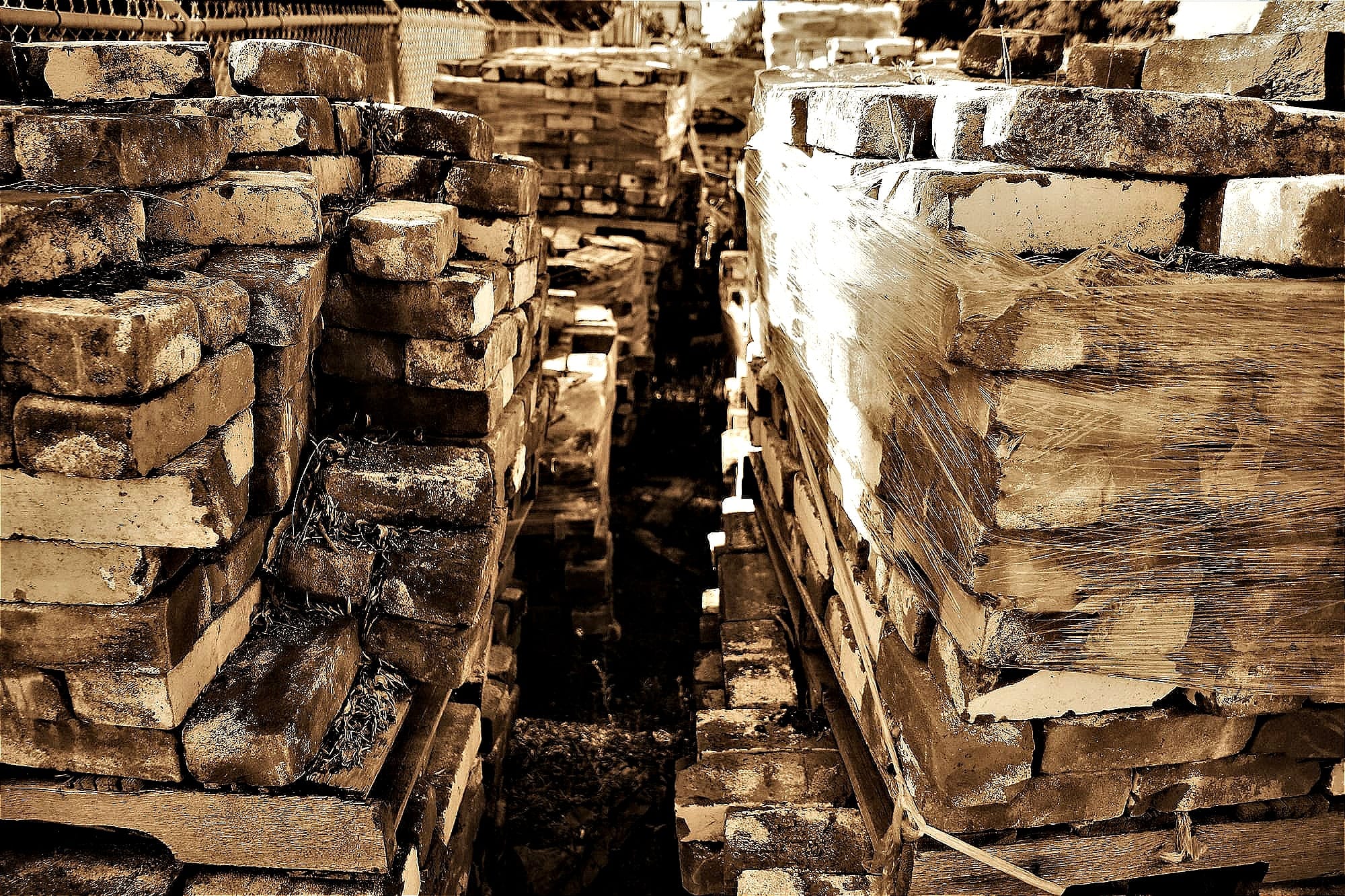
A Pallet of Bricks
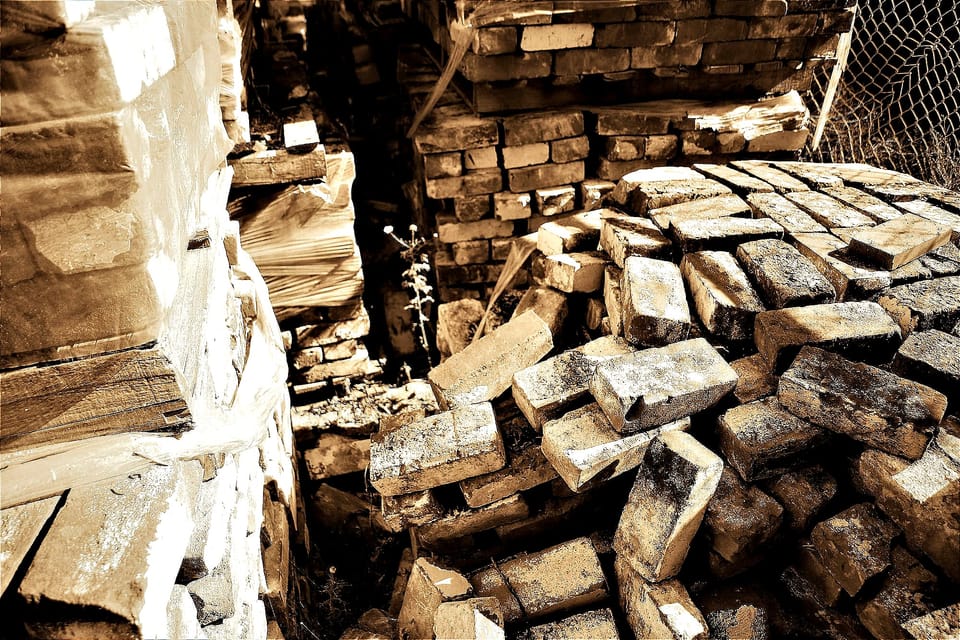
While on patrol as a park ranger in San Diego, about ten years ago, I noticed a fascinating space and took a few moments to photograph it. What follows is my reflection on the experience, an awakening which inspired me to appreciate the beauty of labor and repose.
Here, in the messy and deep recesses of the service yard, decades unfold, as vehicles roar over dirt paths, tools grind, and generations of employees labor and eventually depart. It’s a place of incidental importance. And one day, while moving with the quick rhythms of routine, I noticed a symbol of the yard’s relevance: a pallet of bricks, actually one among many.
Like the great piles of river rock that languish not far away, the brick pallets had been dumped for future use or, perhaps, simply left to decay in the coming years. A service yard is also something of a graveyard for vehicles and tools which no longer serve a purpose, and a place of repose for surplus building materials. I focused on the pallet closest to me.
Peeking out from twisted extensions of plastic—sheets of bright green material—was a pile of bricks, some neatly stacked, others broken from having fallen off their mount. Under a relentless glare, the season being the height of summer, beautiful variations of red were apparent, not least because the pallet had been left in disarray, and its contents unveiled haphazardly. I studied the artifacts and considered their place in the yard, a spot with a magnificent view of other buildings. Since no structures in the immediate area were made of brick, the pallets seemed quaint and out of place, like eccentric loners wandering to pass the time. With this in mind, I completed a series of photographs, some in color and others in high-contrast black and white to emphasize the intrusion of shadows.
Passing through the old yard on the way to other places, I wondered about the time required to build something new and beautiful with a mountain of red bricks or, as the case may be, to repair an older structure fallen from neglect. More than anything, however, I enjoyed the narrative elements of the scene, the potential stories one might find hidden somewhere in that pile, concealed by the many hands that labored to create this strange mess. What might these workers say if I met them? Moreover, what would I say to them?
A moment in time can capture suggestions of change, highlighting the potential of ordinary things, an unused brick crumbling in the sun, a city left to the devices of questionable builders.